I spent the better part of four decades sleeping in truck cabs, motels with questionable mattresses, and whatever seat I could find at a terminal when a run ran long. When I retired and started flying for pleasure, the first thing I noticed was that airline seats are about as comfortable as a park bench after the third hour. So I took neck pillows seriously. I tested the napfun memory foam pillow and the Cabeau Evolution back to back on flights from Orlando to Seattle and Denver to Newark. Here is exactly what I found.
The short answer: the napfun does the job well enough that most travelers will never need to spend the extra money on the Cabeau. But the Cabeau is not a ripoff either. It earns its price for a specific kind of traveler. The full breakdown is below.
| napfun Neck Pillow | Cabeau Evolution | |
|---|---|---|
| Price | ~$19 | ~$40 |
| Fill Material | 100% pure memory foam | Micro-fiber clusters over foam core |
| Neck Support Level | Firm, consistent all around | Firm sides, softer top, adjustable toggle |
| Pack Size (compressed) | Compresses to roughly the size of a large coffee mug | Rolls into attached bag, stays bulkier than napfun |
| Cover Washable | Yes, removable and machine washable | Yes, removable and machine washable |
| Chin Support | Not included | Front snap/toggle closes under chin to prevent head drop |
| Heat Retention | Moderate, warm in summer cabins | Less heat buildup due to fiber clusters |
| Best For | Window seat sleepers, budget-conscious travelers | Aisle or middle seat sleepers, head-dropper sleepers |
| Amazon Rating | 4.3 stars (20,430+ reviews) | 4.4 stars (fewer reviews at this price tier) |
Where the napfun Wins
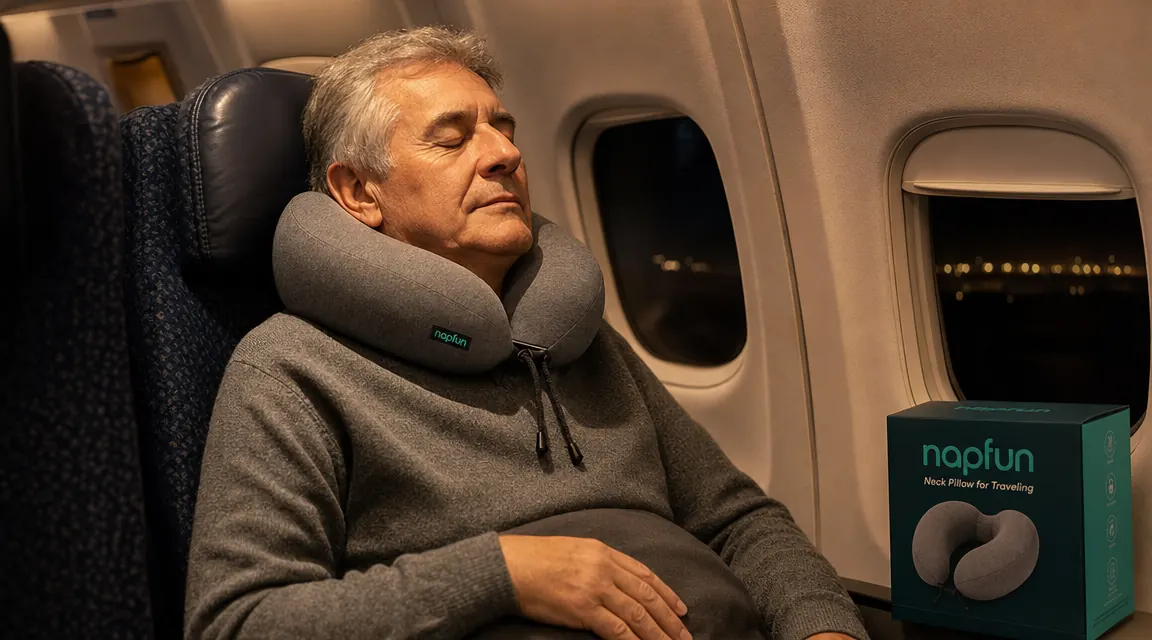
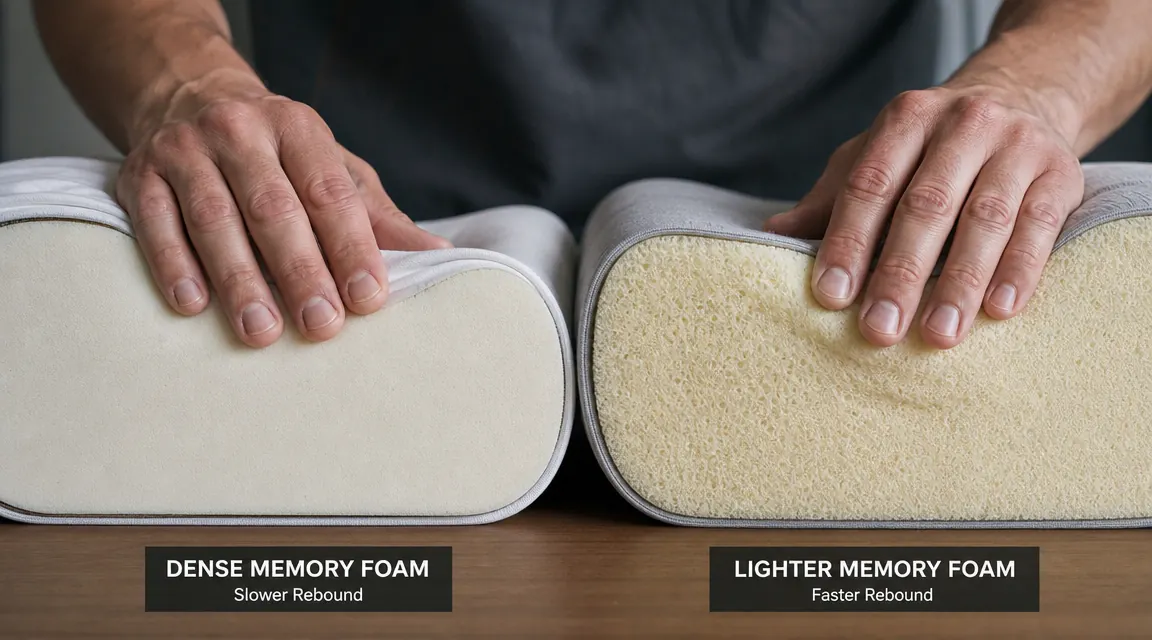
The napfun's biggest advantage is the foam itself. Solid memory foam means it molds to your neck in about thirty seconds and does not shift or collapse the way microbead or cluster-fiber pillows do over a four-hour flight. When I fell asleep against the window on the Orlando to Seattle leg, I woke up two and a half hours later without the usual stiffness between my shoulder blades. That was a first on that route. The Cabeau's sides stayed firm too, but the softer center top meant I had to fiddle with the toggle closure to keep my head from rolling forward. The napfun does not need any adjusting. You put it on and you are done.
The packability difference is real. The napfun compresses down into a carry sack about the size of a big coffee mug. I dropped it in the top of my backpack and forgot about it until I needed it. The Cabeau rolls up and attaches to itself decently well, but it still takes up noticeably more room. For anyone doing carry-on only travel, that matters. And at roughly $19 versus $40, if you lose it in an airport or a taxi driver finds it under the seat, the napfun loss stings a lot less.
If you sleep against the window and want real neck support without paying $40 for it, the napfun is where I'd put my money.
Over 20,000 Amazon buyers have rated it 4.3 stars. The memory foam molds fast, the cover washes clean, and it compresses down small enough to forget it is even in your bag until you need it.
Amazon Check Today's Price on Amazon →Where the Cabeau Evolution Wins
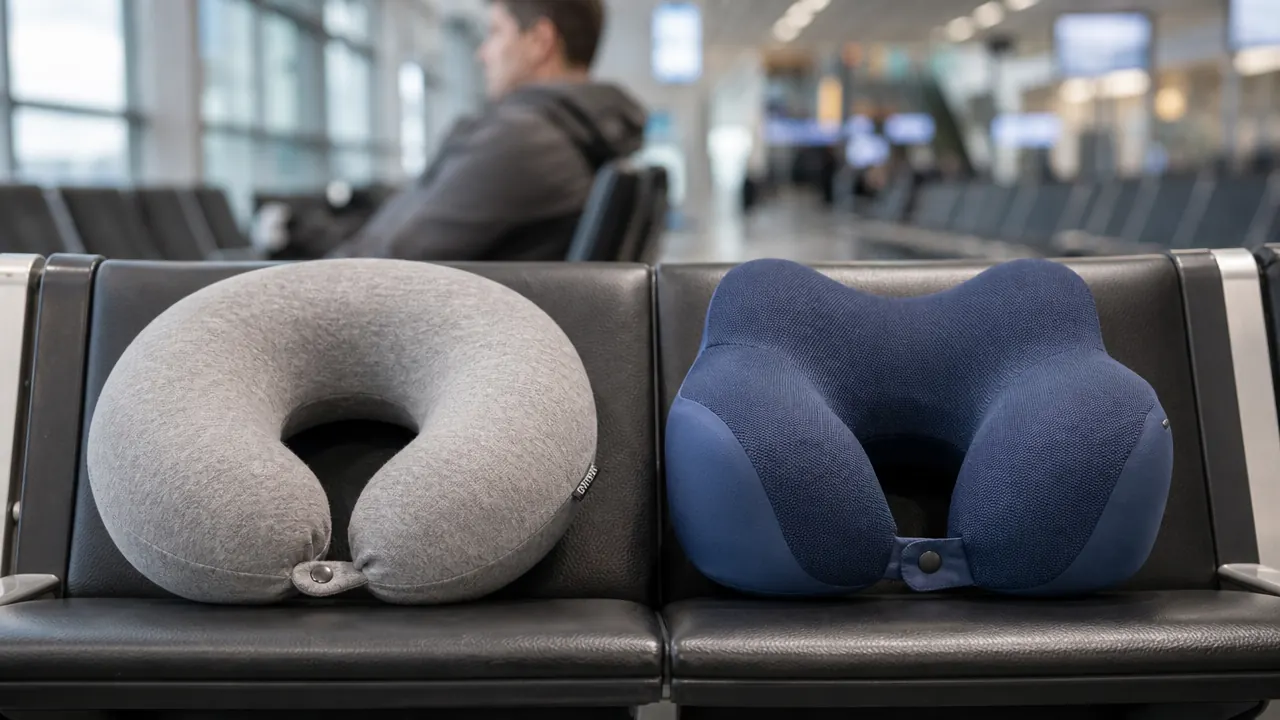
The Cabeau has one feature the napfun simply does not have: the front snap-toggle closure that loops under your chin and keeps your head from dropping forward when you fall into a deeper sleep. If you are an aisle or middle seat sleeper without a wall to lean against, that chin support is the difference between actually resting and jolting awake every twenty minutes when your head bobs down. I noticed this sharply on the Denver to Newark leg where I had a middle seat. The napfun left me with no good angle to hold my head, and I gave up and stared at the seat back for three hours. The Cabeau would have been the right tool for that situation.
The Cabeau also runs cooler. Memory foam traps heat, and in a warm economy cabin after the meal service, the napfun gets noticeably warm against your neck. The Cabeau's fiber cluster fill breathes a bit better. That is not a dealbreaker in most conditions, but on a summer flight or if you tend to run warm, it is worth knowing.
Window seat sleepers can save twenty bucks and get the same quality of sleep. Aisle and middle seat sleepers should think hard about whether that chin toggle is worth the extra cost. For me, it would have been, on the Denver flight.
How They Feel After Three or Four Hours of Real Use
Both pillows hold their shape through a four to five hour flight with no noticeable compression. At the three hour mark, I could not tell a meaningful difference in support quality between the two. The napfun was slightly firmer, which some people love and some find too stiff. If you have a narrow neck or a small frame, the memory foam of the napfun can feel a bit rigid. The Cabeau's slightly softer top gives those travelers a better fit.
After a full travel day, both covers came off easily and went into the wash with no issues. Neither shrank or changed shape in the dryer on low heat. Long-term foam durability is harder to test in a few weeks of use, but solid memory foam historically outlasts fiber cluster fill, which tends to clump unevenly after six to twelve months of regular compression. That is a point in the napfun's favor if you travel often.
What I Noticed That the Listing Photos Do Not Show You
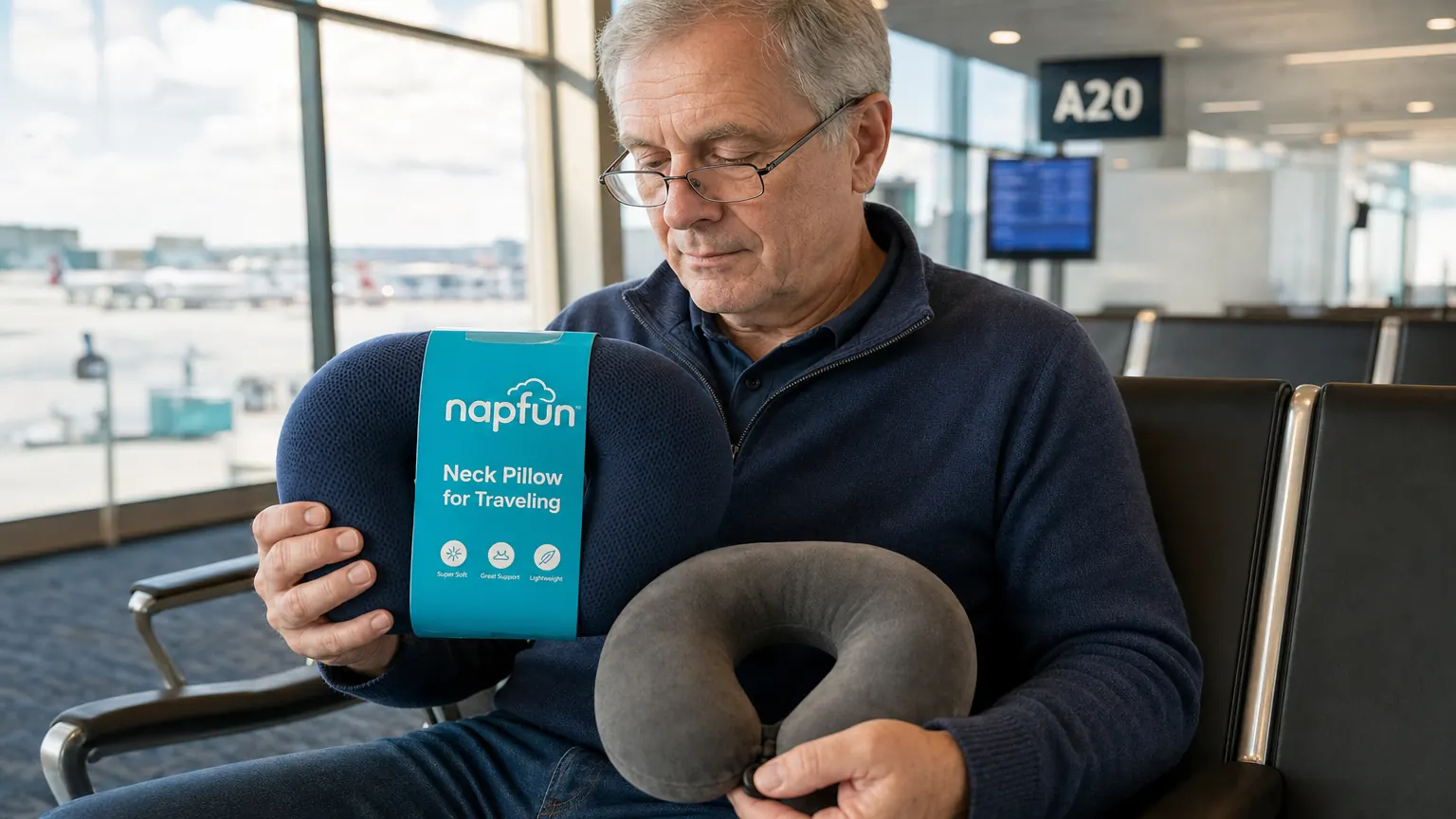
The napfun listing photos make the pillow look a bit larger than it actually is. In person, it is a standard-size travel pillow, which is exactly what you want. No complaints there, just something to know. The Cabeau listing photos accurately represent the product and the front closure mechanism is well-documented in the images. Neither brand is hiding anything, which is refreshing compared to some of the fly-by-night travel gear I have seen on that platform.
One thing both listings underplay is the sizing issue. Standard travel neck pillows fit average adult necks well. If you have a shorter neck or a wider build, neither of these pillows is perfect. The napfun's uniform firm foam is more forgiving for wider necks. The Cabeau's adjustable toggle helps shorter necks keep things snug. Worth thinking about before you buy.
Who Should Buy Which
Buy the napfun if you almost always fly with a window seat, you are watching your spending on travel gear, you value a pillow that packs small and goes in the wash without any fuss, or you just want solid memory foam support without paying a premium for features you will not use. It does the core job well. If it wears out in a couple of years, buying another one still costs less than one Cabeau.
Buy the Cabeau Evolution if you regularly get stuck in aisle or middle seats and your head drops forward when you drift off, if you tend to run warm and want a slightly more breathable fill, or if you are a very frequent flyer who wants the extra adjustability of the front closure system. The extra twenty dollars buys you a specific solution to a specific problem. If that problem is yours, it is a fair trade.
Most travelers will sleep better on the napfun than they think, and wonder why they waited this long to buy one.
Solid 100% memory foam, removable washable cover, and a pack size that does not eat your carry-on. The napfun has over 20,000 reviews for a reason. Check what it is going for today before you decide.
Amazon Check Today's Price on Amazon →